
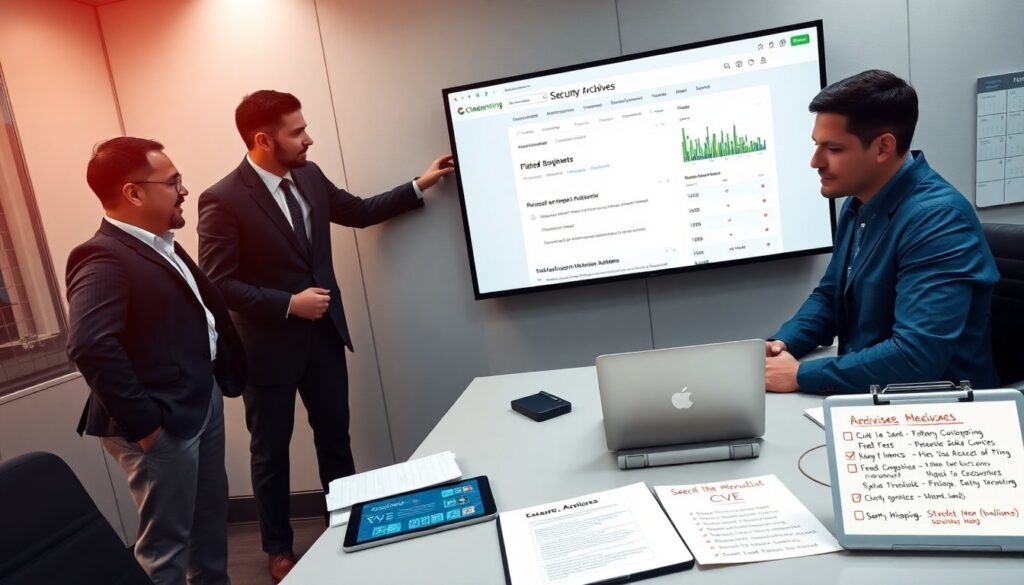
CheckerPointOrg IT security archives provide timely alerts and detailed records for security teams. The archive stores advisories, research notes, and alert metadata. The archive helps analysts find threat indicators and remediation steps. The archive updates daily. The archive supports export and feed subscriptions. The guide explains what the archive holds, how to search it, and how teams use it in response and threat hunting.
Key Takeaways
- The CheckerPointOrg IT security archives provide daily updated advisories, alerts, and research crucial for identifying and mitigating cyber threats effectively.
- Users can perform precise searches using keywords, CVE numbers, and file hashes, with filters for date, severity, product, and threat type to streamline results.
- High-priority alerts feature actionable checklists, detailed exploitation data, and remediation steps to accelerate incident response.
- Security teams leverage the archive for incident scoping, IOC extraction, and threat hunting by comparing indicators with local telemetry and applying recommended mitigations.
- The archive supports integration via RSS and JSON feeds with SIEMs and SOAR tools, enabling automated alert ingestion, containment actions, and enriched incident context.
- Saved searches, filter presets, and export options enhance usability for repeated analysis and support thorough security workflows.
What The CheckerPointOrg IT Security Archives Include
The CheckerPointOrg IT security archives include alerts, advisories, and research summaries. The archives include CVE-linked advisories and proof-of-concept details. The archives include mitigation steps and configuration examples. The archives store IOC lists, YARA rules, and sample traffic captures. The archives tag entries with product, severity, and affected component. The archives record publication date, author, and revision history. The archives keep raw data and parsed metadata for automation. The archives allow users to download artifacts and reference files for offline analysis.
How To Search And Navigate The Archives
The user opens the archive portal and types a query. The search box supports keywords, CVE numbers, and file hashes. The portal returns matching items with snippets and tags. The portal shows filters for date and severity. The portal shows related entries and linked advisories. The portal displays feed subscription options. The portal provides direct download links for artifacts. The portal logs user activity for audit and repeatable searches.
Search Tips For Faster, More Accurate Results
Use specific product names to narrow search results. Use CVE IDs to find precise advisories. Use file hashes to find exact samples. Use quoted phrases to search exact strings. Use boolean operators to combine terms. Use the portal’s autocomplete to reduce typos. Use saved searches for repeated queries. Use the export feature to move results into spreadsheets or analysis tools.
Filtering By Date, Severity, Product, And Threat Type
Set a date range to limit results to relevant windows. Set severity to surface critical or high issues first. Choose product filters to focus on affected software. Choose threat type to separate malware, misconfiguration, and phishing. Combine filters to reduce result noise. Use the timeline view to see alert spikes. Use the severity histogram to prioritize triage work. Use saved filter presets for common workflows.
High‑Priority Alerts, Vulnerability Advisories, And Research Summaries
The archive highlights high-priority alerts on the landing page. The highlights include quick action checklists and affected versions. The advisories document exploitation details and remediation commands. The advisories list CVE references and threat actor notes. The research summaries explain attacker techniques and pivot paths. The summaries provide detection suggestions and log examples. The entries include links to sample queries for SIEMs and detection rules. The entries include timelines that show discovery and patch release dates.
Using The Archives In Incident Response And Threat Hunting
Teams use the archive to scope incidents quickly. Teams extract IOCs to feed containment and blocking actions. Teams compare local telemetry with archive indicators to confirm compromise. Teams follow remediation steps in advisories to remove threats. Teams reference research summaries to craft hunt hypotheses. Teams document actions and attach archive records to incident tickets. Teams share sanitized archive references with partners for coordinated response. Teams train new analysts using past incident entries from the archive.
Integrating Archive Feeds Into SIEMs, SOAR, And Other Security Tools
The archive offers RSS and JSON feeds for automation. Security teams subscribe to feeds to push alerts into SIEMs. Teams map archive fields to SIEM event fields for consistent ingestion. Teams feed IOCs into SOAR playbooks to automate containment steps. Teams schedule regular pulls to keep detection rules current. Teams use the archive API to enrich alerts with advisory context. Teams test ingestion in a staging environment before production use. Teams monitor feed health and rotate API keys on a schedule.